


How to Tell If Your Commercial Refrigerator Needs Repair Before It Fails
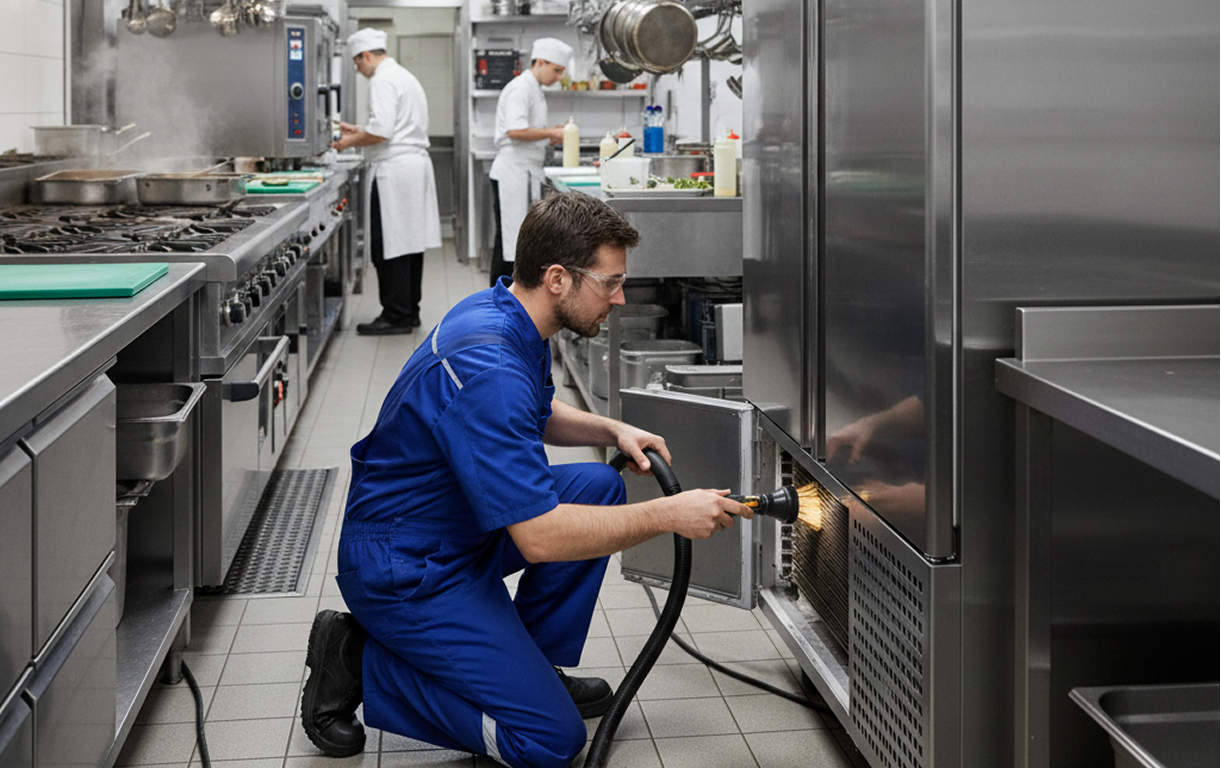

A failing commercial refrigerator rarely breaks down without warning. For restaurants, cafes, and food businesses across Santa Cruz and Monterey County, catching the signs early is the difference between a service call and a full inventory loss.
Why Early Detection Matters
Commercial refrigeration units run 24 hours a day, seven days a week. That constant operation means wear accumulates faster than in residential equipment — and when something goes wrong, it tends to go wrong during your busiest hours. A unit that's been struggling for weeks doesn't give much notice before it stops holding temperature entirely.
Warning Signs to Watch For
Temperature Inconsistency
If your unit is struggling to maintain its set temperature — or if different areas inside the unit feel warmer than others — the compressor, evaporator coil, or refrigerant level may be the cause. Check your thermometer regularly. A variance of more than 2–3°F from the set point warrants attention.
Excessive Condensation or Ice Buildup
Some condensation is normal. Frost or ice accumulating on the evaporator coils, door gaskets, or interior walls is not. Ice buildup restricts airflow, forces the compressor to work harder, and accelerates the decline of the unit.
Compressor Running Constantly
A properly functioning compressor cycles on and off to maintain temperature. If yours runs continuously without cycling down, it's working harder than it should — a sign that it's losing efficiency or that refrigerant levels are low.
Unusual Noises
Clicking, rattling, or buzzing from a commercial unit often points to a failing compressor, a loose fan blade, or a relay issue. These sounds don't resolve on their own and typically get worse over time.
Rising Energy Bills
A refrigeration unit that's losing efficiency draws more power to compensate. If your electricity bill has increased without a change in usage, your refrigeration equipment is worth inspecting.
Warm Air from the Condenser
The condenser coils release heat as part of normal operation — but if the area around the unit feels excessively warm or the condenser fan isn't running, airflow is restricted and the system is at risk of overheating.
How Often Should Commercial Refrigeration Be Serviced?
For most food service businesses, a professional inspection every six months is the minimum. Units in high-use environments — busy kitchens, bars, or delis — benefit from quarterly checks. Regular maintenance catches small issues before they become equipment failures.
How Plug-In Services Can Help
We service and repair commercial refrigeration equipment across Santa Cruz and Monterey County. If your unit is showing any of these signs, don't wait for a complete failure — the cost of a service call is a fraction of what a lost inventory event or emergency repair will run you.
Call us at (831) 888-9348 or schedule online. Diagnostic fee of $80 is waived when you hire us.

SOCIALS


